
Mortgage Website Design Cost: How Much Does It Really Cost to Build and Maintain?
A mortgage website build typically ranges from modest template-based setups to fully custom, conversion-optimized sites, with total ownership costs expressed either as a one-time project fee (several thousand dollars) or an ongoing monthly investment (hundreds to low thousands per month) depending on features and services. This article breaks down what drives those ranges, how common pricing models work, and which recurring expenses you should budget for to keep applications, calculators, and secure forms operating reliably. Mortgage brokers, loan officers, and small lending teams will learn which features—CRM and mortgage calculator integrations, secure application flows, advanced SEO, and conversion-focused design—add the most cost and value. The piece maps pricing models (one-time, monthly subscription, hourly retainer), quantifies core cost drivers with scannable tables, and explains how inclusive services like unlimited graphic design or bundled SEO change total cost of ownership. Read on for practical comparisons, example price bands, EAV tables tying features to impact, and a focused vendor comparison that shows how fixed monthly offerings affect long-term ROI and time-to-lead.
What Are the Key Factors Influencing Mortgage Website Design Cost?
A mortgage website’s price is driven primarily by feature complexity, integration requirements, content needs, design customization, and ongoing SEO and security obligations. Complex custom integrations—secure application forms, CRM syncing, encryption and compliance checks—require developer hours and testing cycles that inflate upfront and maintenance costs. High-quality content and mortgage-specific SEO demand keyword research, landing pages, and regularly updated educational material to generate organic leads, which increases both initial build and monthly retainers. The scope of visual design—custom UX vs template—also determines the time investment and thus cost, and that design work directly affects conversion rates and lifetime value of leads.
Key cost drivers listed for quick comparison:
- Feature complexity and integrations: custom CRM, secure forms, automated workflows.
- Content and SEO scope: pages, landing pages, blog content, technical SEO.
- Design level: bespoke UX and branding versus template-based builds.
The next table maps features to the primary cost driver and gives typical price ranges to help prioritize budget decisions.
This table highlights which features most affect budgets so teams can choose trade-offs that maximize lead generation while controlling cost. Understanding these drivers leads naturally into how different pricing models package and bill for them.
How Do Custom Features and SEO Impact Mortgage Website Pricing?
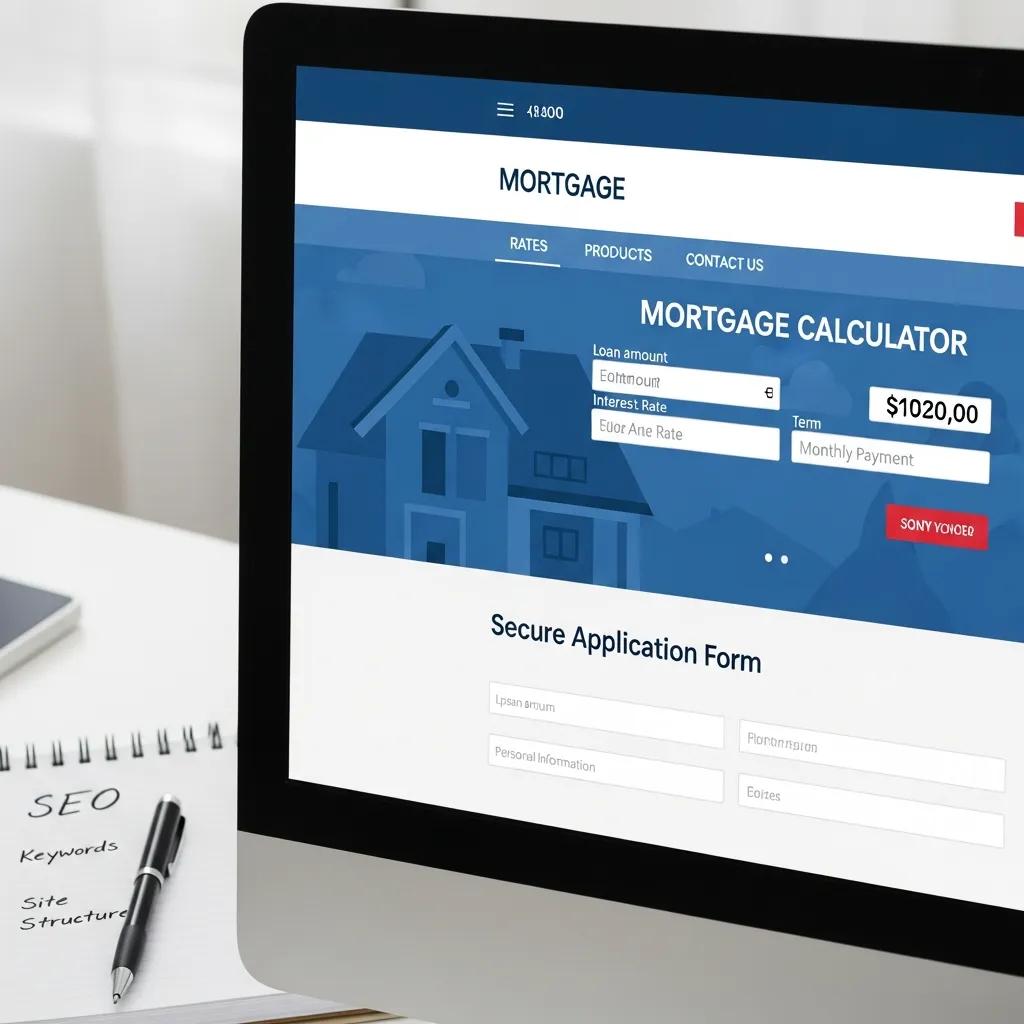
Custom features and SEO both increase initial development and ongoing expenses because they require specialized engineering and continuous content work. A secure mortgage application flow or CRM sync adds development, QA, and compliance review hours, often translating into several hundred to a few thousand dollars depending on complexity. Advanced SEO requires technical setups—schema, page speed, index management—and sustained content production that typically adds a monthly retainer or ongoing hourly work. Investing in SEO is an investment in leads: technical and content SEO can lift organic traffic and conversion rates, creating measurable ROI that often justifies the added monthly cost.
These technical investments also affect time-to-value: richer integrations typically delay launch but increase automation and lead capture quality, which is the next planning consideration in choosing pricing models.
What Role Does Unlimited Graphic Design Play in Overall Website Cost?
Unlimited graphic design as a billing model converts variable design tasks into a predictable monthly expense, shifting many small, recurring creative tasks off hourly invoices and into a subscription. For organizations that frequently update marketing assets, landing pages, or campaign creatives, an unlimited design service reduces per-task marginal cost and simplifies budgeting by replacing sporadic freelancer invoices with one stable line item. That predictability helps teams iterate landing pages faster, improving conversion optimization without sudden spikes in spend, and can be particularly valuable when paired with ongoing SEO or paid campaigns that require frequent visual assets.
Predictable design support reduces the need to hire intermittent external designers, which shortens turnaround times and enhances campaign agility—advantages that feed directly into model selection explained next.
How Are Mortgage Website Pricing Models Structured?
Mortgage website pricing generally falls into three structures: one-time setup fees, monthly subscriptions, and hourly or retainer-based billing, each aligning with different cash-flow preferences and long-term goals. One-time fees cover a defined deliverable set—design, development, and launch—best for teams that want ownership and control but should plan for separate ongoing maintenance costs. Monthly subscriptions bundle hosting, updates, templates, and sometimes SEO/design support into a predictable ongoing payment that simplifies budgeting and often includes faster deployment. Hourly or retainer models suit ad-hoc needs but can introduce unpredictability and scope creep for ongoing tasks like SEO or continuous feature work.
Below is a concise comparison table that shows what each model typically includes and who it fits best.
This structured view helps decision-makers match cash-flow with desired service levels and total cost of ownership. Some monthly providers package unlimited design and SEO into the subscription, which reduces surprise hourly bills and increases long-term predictability.
What Is the Difference Between One-Time Fees and Monthly Subscriptions?
One-time fees require a larger upfront investment that results in asset ownership, but they often leave long-term maintenance, hosting, and SEO to separate contracts, which can increase lifetime cost unpredictably. Monthly subscriptions convert that capex into an operational expense that frequently includes hosting, security, and some level of content or design support, offering predictable budgeting and faster iterative improvement cycles. Choosing between them depends on whether you value owning the codebase and assets now or prefer managed services that reduce internal overhead over time.
Understanding these trade-offs leads to comparing hourly retainers next, which can be cost-effective for limited-scope work but risky for continuous needs.
How Do Hourly Rates Compare to Fixed-Price Packages for Loan Officer Websites?
Hourly rates are straightforward for one-off tasks but create risk of scope creep when ongoing changes, A/B tests, or SEO work accumulate, often resulting in higher annual spend than anticipated. Fixed-price packages define scope and cost upfront, simplifying budgeting and frequently bundling maintenance, minor updates, and conversion optimization into the ongoing package.
For loan officers who require steady updates—rate changes, landing pages, seasonal campaigns—a fixed package often yields lower per-task costs and faster turnaround compared to hourly work.
For many lending professionals, the predictability of a fixed monthly package supports continuous improvement and better ROI tracking, which is central to vendor comparisons discussed below.
How Does LoanSites’ Mortgage Website Pricing Compare to Other Options?
LoanSites is a specialized mortgage marketing company offering website design, advanced SEO, and unlimited graphic design services tailored for mortgage professionals, which positions its pricing toward managed monthly models rather than pure project buys. Their primary product is a proven lead-generating mortgage website built within ten business days, with ongoing support and customization included at a fixed monthly rate. That model shifts cost from volatile hourly or piecemeal maintenance to a predictable subscription that bundles rapid deployment, conversion-focused templates, and continuous SEO efforts that are typically billed separately by other providers.
Key benefits summarized:
- Rapid deployment: a lead-ready site in ten business days accelerates time-to-lead.
- Predictable monthly cost: eliminates frequent small invoices for design or updates.
- Bundled SEO and unlimited design: reduces external agency fees and fosters faster iterative optimization.
A short numeric comparison: replacing ten hours of freelancer work per month at typical freelance rates with an inclusive monthly plan can save several thousand dollars annually while improving turnaround—making fixed monthly ownership financially and operationally efficient for many brokers.
What Are the Benefits of LoanSites’ Unlimited Support and SEO Services?

Unlimited support and integrated SEO reduce friction for continuous content creation, design tweaks, and technical improvements that drive organic lead growth. With unlimited design, small creative requests, landing page iterations, and campaign visuals don’t require separate invoices, enabling faster A/B testing and conversion optimization. Bundled SEO ensures technical foundations—schema, index management, performance tuning—are maintained alongside content updates that improve search visibility and lead volume. These combined services shorten the path from launch to measurable ROI by aligning creative and technical work under one predictable monthly commitment.
This integrated approach also lowers the labor cost of incremental improvements that typically add up over time when sourced hourly from freelancers or multiple vendors.
How Does LoanSites’ Fixed Monthly Rate Save Money Compared to Freelancers or Agencies?
A fixed monthly rate consolidates hosting, security, design requests, and ongoing SEO into one recurring expense, which reduces marginal costs per update compared with paying freelancers by the hour for each change. Over a year, recurring freelancer hours for page updates, graphics, and SEO tasks commonly exceed the cost of an inclusive package; consolidating these services also reduces administrative overhead and coordination delays. Non-monetary savings include faster turnaround, consistent brand application, and centralized responsibility for lead-generation performance—benefits that often translate into improved conversion rates and reduced cost-per-lead.
Comparing projected annual spend side-by-side helps teams choose between ad-hoc hourly support and bundled monthly models that incentivize continuous optimization.
What Are the Ongoing and Hidden Costs of Owning a Mortgage Website?
Owning a mortgage website involves recurring expenses beyond the initial build: hosting, SSL and security monitoring, backups, compliance and privacy reviews, third-party integration fees, and continuous content/SEO maintenance that keep search rankings and form security intact. These recurring costs can materially affect annual budgets if not planned for, and small, recurring design and update requests can compound into a significant ongoing spend when handled hourly. Budgeting for these items up front helps prevent surprises and enables a clear comparison between one-time ownership and managed subscription models.
Below is a table that makes common ongoing costs tangible with typical annual bands for planning.
This table clarifies where budgets are consumed and where fixed monthly packages can reduce variability by absorbing many line items. Next, we look at specific hosting and security expectations.
Which Hosting, Maintenance, and Security Fees Should Mortgage Brokers Expect?
Mortgage sites require reliable hosting and rigorous security practices—managed hosting with automatic backups, SSL certificates, DDoS protection, and regular vulnerability scans are recommended to protect sensitive applicant data. Managed hosting costs more than basic shared hosting but significantly reduces administrative time and risk; brokers should budget for higher-tier plans if their site handles secure applications and PII. Annual planning should account for certificate renewals, backup retention, and any compliance audit costs; including these in a managed monthly plan simplifies budgeting and lowers the chance of service lapses.
Choosing managed platforms or subscriptions often avoids the hidden labor costs of self-managing infrastructure, which leads into the next cost center: content and SEO maintenance.
How Do Content Updates and SEO Maintenance Affect Long-Term Website Investment?
Content updates, landing page creation, technical SEO audits, and link-building are ongoing activities required to maintain and grow organic traffic; they require dedicated hours each month and can be the largest recurring expense for lead-dependent sites. Monthly SEO maintenance typically covers keyword-driven content, on-page optimization, analytics review, and minor technical fixes—tasks that compound over time to improve rankings and lead quality. Including these functions in a fixed monthly plan or an unlimited design arrangement reduces per-task marginal costs and supports continuous optimization, which is crucial for sustaining ROI in competitive local mortgage markets.
Budgeting predictable monthly support prevents performance decay and allows teams to prioritize conversion-focused improvements rather than firefighting technical issues.
This article covered the primary cost drivers, pricing models, vendor comparison with LoanSites’ fixed monthly approach, and the main ongoing expenses that drive total cost of ownership. Use the tables and lists above to align your budget with the features and service model that deliver the best lead generation and long-term ROI for your mortgage practice.
SEO Guidelines for Financial Organizations: Boosting Website Traffic
Search engine optimization (SEO) is a relatively new type of marketing that focuses on optimizing web pages to gain higher rankings in search results. The main benefit of optimizing your website is an increase in website traffic. An example would be typing “need fast money now” or “buying a house loan” into any search engine and viewing the results. If your page is at the top of the search engine results, the search engine thinks your web page has the most relevant answer to these queries, opening the gate to potential customers. These guidelines provide a useful listing of best practices for financial organizations in order to gain more visib
Frequently Asked Questions
What are the typical ongoing costs associated with maintaining a mortgage website?
Ongoing costs for a mortgage website can include hosting fees, security monitoring, content updates, and SEO maintenance. Hosting can range from $300 to $3,000 annually, depending on the service level. Security measures, including SSL certificates and backups, may add another $150 to $1,200 per year. Content updates and SEO maintenance can significantly vary, with costs typically between $1,200 and $6,000 annually. It’s essential to budget for these recurring expenses to avoid unexpected financial strain.
How can mortgage brokers ensure their website remains compliant with regulations?
To ensure compliance, mortgage brokers should regularly review their website for adherence to industry regulations, including data protection laws and accessibility standards. This involves implementing secure application processes, maintaining up-to-date privacy policies, and conducting regular audits. Engaging with legal or compliance experts can provide guidance on necessary updates. Additionally, using managed hosting services that include compliance checks can help mitigate risks associated with regulatory non-compliance.
What features should mortgage brokers prioritize for better lead generation?
Mortgage brokers should prioritize features that enhance user experience and streamline the application process. Key features include a secure mortgage application form, a mortgage calculator, and CRM integration for lead management. Additionally, implementing SEO best practices and creating educational content can attract organic traffic. A responsive design that works well on mobile devices is also crucial, as many users access websites via smartphones. These features collectively improve conversion rates and lead generation.
How does website speed impact mortgage lead generation?
Website speed is critical for lead generation, as slow-loading pages can lead to high bounce rates and lost opportunities. Research shows that users expect a page to load in under three seconds; delays can frustrate potential clients and drive them to competitors. Optimizing images, leveraging browser caching, and using a reliable hosting service can enhance speed. A fast website not only improves user experience but also positively impacts SEO rankings, further increasing visibility and lead potential.
What role does content marketing play in a mortgage website’s success?
Content marketing is vital for a mortgage website’s success as it helps establish authority and trust within the industry. By providing valuable information through blog posts, guides, and FAQs, brokers can engage potential clients and address their concerns. Regularly updated content also boosts SEO, improving search engine rankings and driving organic traffic. Additionally, educational content can guide users through the mortgage process, making them more likely to convert into leads.
How can mortgage brokers measure the ROI of their website investment?
Mortgage brokers can measure the ROI of their website investment by tracking key performance indicators (KPIs) such as lead conversion rates, website traffic, and customer acquisition costs. Utilizing analytics tools can help assess how many visitors convert into leads and the overall cost associated with acquiring those leads. Additionally, monitoring the performance of specific features, like calculators or application forms, can provide insights into which elements drive the most value, allowing for informed adjustments to strategy.
Conclusion
Understanding the costs associated with mortgage website design is crucial for brokers and lending teams aiming to maximize their investment. By evaluating key factors such as feature complexity, ongoing SEO, and pricing models, you can make informed decisions that enhance lead generation and ROI. Embrace a structured approach to budgeting that aligns with your business goals and operational needs. Explore our resources to find the best solutions tailored for your mortgage practice today.